|

HOME |
ABOUT | INDEX |
NEWS |
FACEBOOK |
CONTACT
STEREOTYPES
Tropes | Generalizations | Clichés | Assumptions
Beyond Gay
Generalizations
Everyone
has perceptions or preconceived ideas about what it
means to be LGBTQ. Many people think they can tell if
someone is gay or lesbian by the way they look, dress,
or behave.
By resting on clichés, or resorting to stereotypes or
conventional formulaic generalizations, many
misconceptions and mistaken identities can easily occur.
Stereotypical perceptions may be acquired through
interactions with parents, teachers, peers and mass
media, or, more generally, through a lack of firsthand
familiarity, resulting in an increased reliance on
generalizations.
Some people who might get embarrassed because their "gaydar"
wasn't fine tuned, just might have to admit they may
have been exercising their private prejudices or
preconceived notions about gays and lesbians.
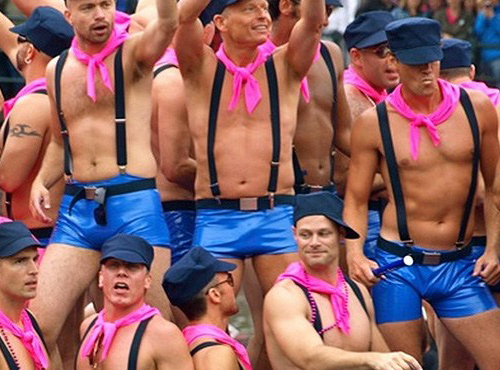
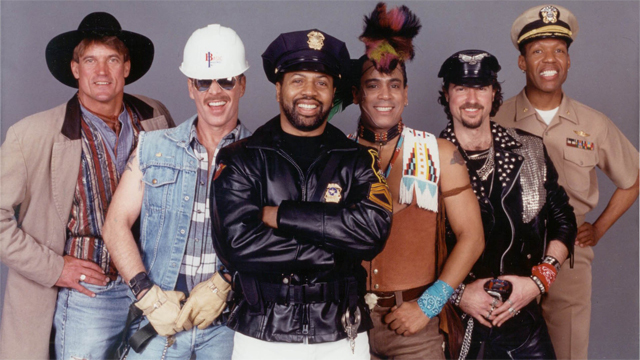
Queereka: Myths and Misconceptions About Gay Men
Video: What Straight People Think Lesbians Look Like
This is What AI Thinks Gay Men in all 50 States are Like
LGBTQ History: The Story of Camp from Little Richard to
Lil Nas X
Info: Myths and Misconceptions
Queer Like Pete: The Gay Archetype
Advocate: Why Effeminate Gays Are Fabulous
Huff Post: Why I Hate Being Called a Lipstick Lesbian
Discrimination of Men with
Gay Voices
Lady Gaga Film House of Gucci Isn't Campy Enough
Queer Code Switching
Gay Men
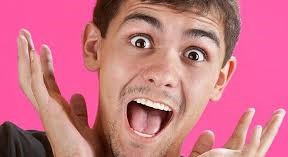
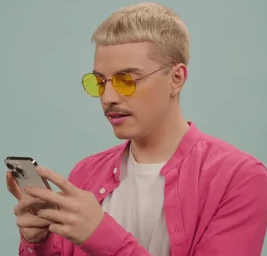
Not all gay men are effeminate and flamboyant (queens).
Just because someone is a gay man, doesn't mean he…
--Is obsessed with fashion and is super stylish
--Is limp-wristed, swishy and talks with a lisp
--Listens to Broadway show tunes
--Loves to
shop
--Is involved in theatre and the performing arts
--Is
promiscuous
--Is a hairdresser, fashion designer, or interior
decorator
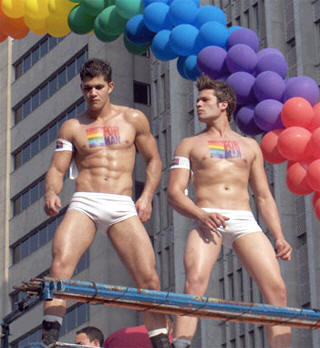
--Frequents seedy gay bars and dances shirtless to disco
music
--Acts in
an overly dramatic and campy way
Huff Post: Harmful Stereotypes About Gay Men
SPLC: Anti-Gay Myths Debunked
New TV Shows Moving Away
From Old Gay Stereotypes
Queer Like Pete: The Gay Archetype
Discrimination of Men with
Gay Voices
Stereotypes
That Limit Our Perception of Gay Men
Gay Myths and Stereotypes
Info: Myths and Misconceptions
Lesbian Women
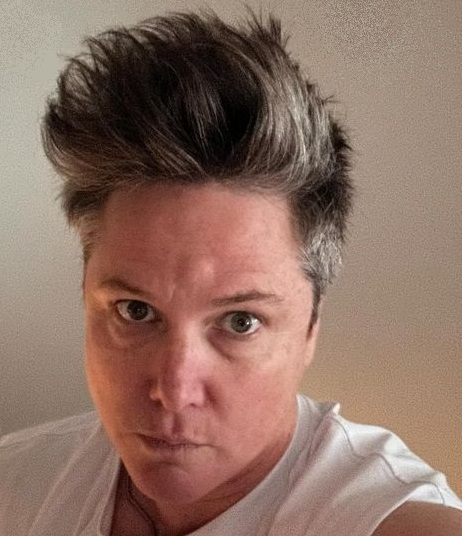
Not all lesbians are butch and tomboyish (dykes).
Just
because someone is a lesbian, doesn't mean she…
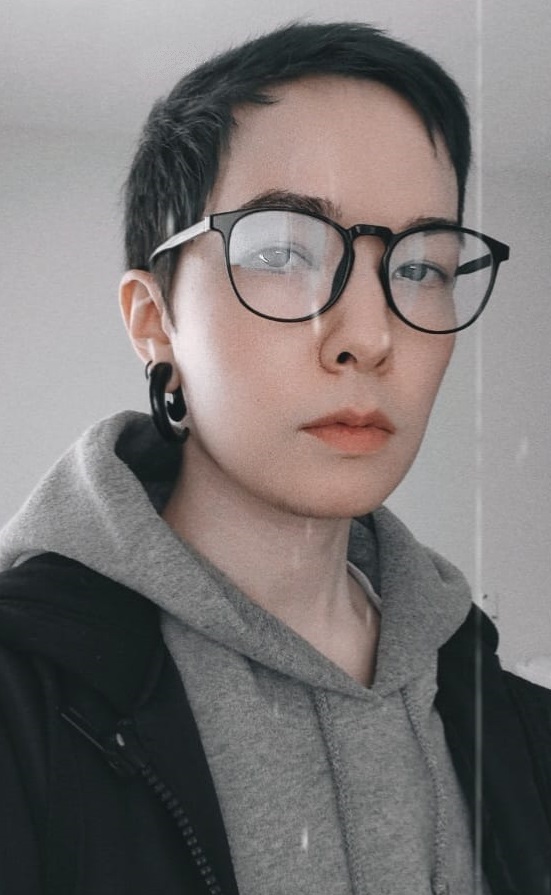
--Wears short hair, tattoos, body piercings, and army
boots
--Acts
moody, angry, and aggressive
--Drives a pick-up truck and wears a tool belt
--Is really into sports
--Wears plaid lumberjack shirts and baggy cargo shorts
--Only listens to music by KD Lang, The Indigo Girls,
and Melissa Etheridge
--Wears leather and rides a motorbike
--Doesn't
wear makeup and doesn't shave her armpits and legs
--Moves in
on the second date


This is What AI Thinks Gay Men in all 50 States are Like
Big Boys’ Dylan Llewellyn and Jon
Pointing on Subverting Gay TV Tropes
Macklemore, Musical Theatre, and More
DotGay Dictionary: What is Gaydar?
Elite Daily: Stereotypes
That Limit Our Perception of Gay Men
Info:
Gender Expression
Gay Myths and Stereotypes
Wikipedia: Camp
Live Science: Debunking Myths About Gay People
Jezebel: Girl's Guide to Lesbian Clichés and Stereotypes
Gaydar: Is It Real?
BuzzFeed: Lesbian Stereotypes
Behavior and
Appearance
LGBTQ
people are found in every social, economic, racial, and
religious group. They are our teachers, colleagues,
friends, parents, and children. Most LGBTQ people look
and act just like everyone else. They come from all
walks of life, all races, all economic levels, and all
political perspectives. We all know a number of LGBTQ
people, whether we are aware of it or not.
Typically, you can't spot a gay man or lesbian women by
the way they act and dress. Gender roles do not
determine sexual orientation. Many LGBTQ people are
impossible to distinguish from straight and more gender
normative individuals. There are some lesbians who dress
in a very masculine way, some gay men who act in
traditionally feminine ways, and many LGBTQ people who
feel the freedom to explore a range of gender
expression. There are also many gender normative LGBTQ
people who “pass” unnoticed every day.
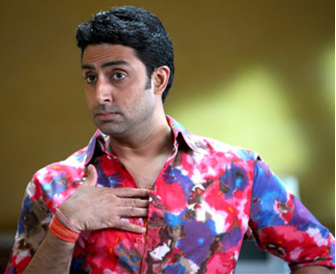
Popular media tends to perpetuate the common stereotypes
associated with gays and lesbians. Portrayals of gays
and lesbians in movies and on television tend towards
stereotypical behavior. Gay and lesbian characters all
too often are caricatures, reflecting stereotypical
looks, mannerisms, and lifestyles.
It is a
misconception that you can always tell homosexuals by
the way they look or act. Typically, we think that men
who act in a feminine manner must be gay and that
masculine women with short haircuts must be lesbians.
Too often people think they can generalize about the
activities and lifestyle of gays and lesbians. Some
people have long held assumptions about the kinds of
music LGBTQ people listen to, the kinds of clothes LGBTQ
people wear, and the kinds of entertainment LGBTQ people
enjoy. Some might even generalize about the traits that
they think characterize a typical gay or lesbian
relationship.

Info: Myths and Misconceptions
Queer Like Pete: The Gay Archetype
Huff Post: Why I Hate Being Called a Lipstick Lesbian
Discrimination of Men with
Gay Voices
Macklemore, Musical Theatre, and More
Elite Daily: Stereotypes
That Limit Our Perception of Gay Men
Info:
Gender Expression
DotGay Dictionary: What is Gaydar?
Gay Myths and Stereotypes
Advocate: Why Effeminate Gays Are Fabulous
BuzzFeed: Lesbian Stereotypes
Queer Code Switching
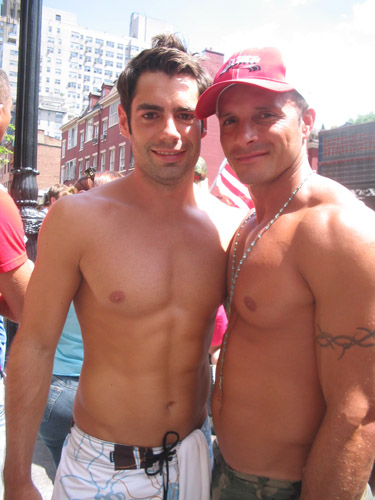
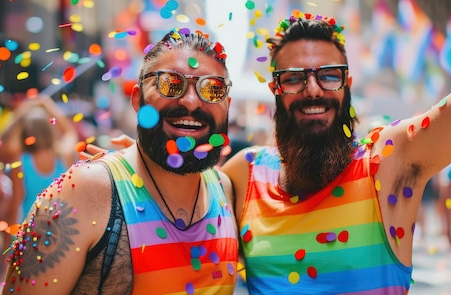
Most gay
and lesbian people look just like your typical neighbors
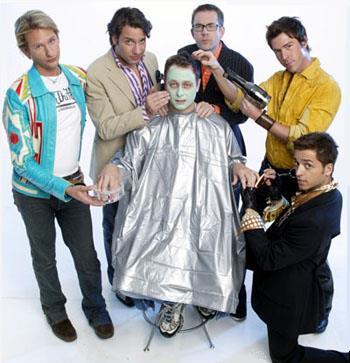
instead of like the characters on Queer as Folk or
Queer Eye for the Straight Guy.
Some
people have suggested that the media perpetuates gay and
lesbian stereotypes. Television shows like "Will &
Grace" and "Modern Family" sometimes present gay and
lesbian characters in clichéd ways.
The reality is that these stereotypes only apply to
about 15% of gays and 5% of lesbians. These stereotypes
confuse the concept of sexual orientation with gender
roles.
In an attempt to understand observed behaviors,
appearances, and mannerisms of gay and lesbian people,
it might be instructive to recognize the difference
between one's sexual orientation and gender role. An
individual's sexual orientation is about whether one
prefers the same sex or the other sex as a sexual
partner. An individual's gender role is about whether he
or she is exhibiting masculine or feminine behavior.
There is a cultural tendency to view homosexuality as
“behavior” rather than a personal identity.
While there are some gay and lesbian persons who fit
these stereotypes, they are no more representative of
all homosexual people than are the Marlboro Man and June
Cleaver types representative of all straight people.
LGBTQ people generally look and act like everyone else.
Most people never suspect the sexual orientation of an
LGBTQ individual.

This is What AI Thinks Gay Men in all 50 States are Like
Big Boys’ Dylan Llewellyn and Jon
Pointing on Subverting Gay TV Tropes
Huff Post: Harmful Stereotypes About Gay Men
SPLC: Anti-Gay Myths Debunked
Stereotypes People Should Stop Believing About LGBTQ
People
Info:
Gender Expression
LGBTQ Stereotypes That Need to Die
Gaydar: Is It Real?
Appearance and Mannerisms
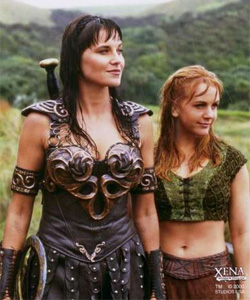
Typically, lesbians are thought to be "butch", dressing
in a more masculine or tomboyish manner; with plaid
flannel shirts, short haircuts, work boots, tattoos, and
body piercings, for example. "Dykes" (a pejorative term
that the LGBTQ community has reclaimed to an extent) are
considered members of a community that is perceived as
being composed of strong and outspoken, often angry and
aggressive, women.
On the other hand, a "lipstick lesbian" is a "femme"
women who tends to be "hyper-feminine,” conventionally
attractive, and almost indistinguishable from a straight
woman. They are portrayed as pretty and stylish. They
wear make-up and heels.


Huff Post: Harmful Stereotypes About Gay Men
SPLC: Anti-Gay Myths Debunked
New TV Shows Moving Away
From Old Gay Stereotypes
Queer Like Pete: The Gay Archetype
Discrimination of Men with
Gay Voices
Info: Myths and Misconceptions
Big Boys’ Dylan Llewellyn and Jon
Pointing on Subverting Gay TV Tropes
Live Science: Debunking Myths About Gay People
Wikipedia: LGBTQ
Stereotypes
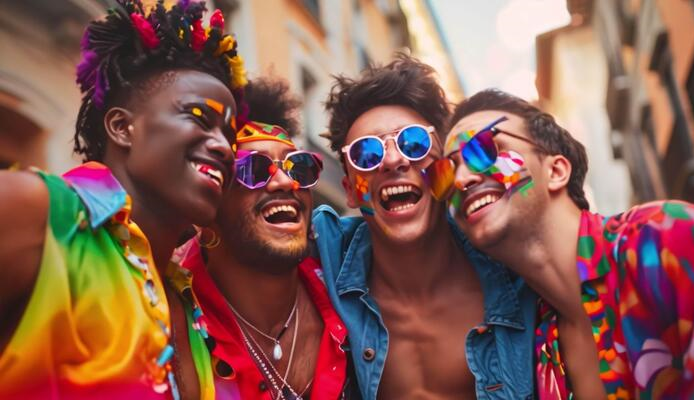
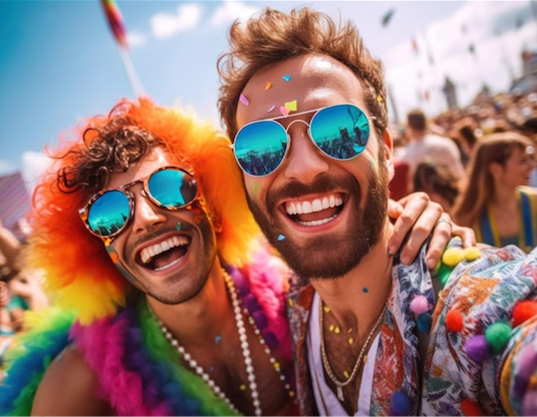
The "flaming queen,” a characterization that melds
flamboyance and effeminacy, remains a gay male stock
character in Hollywood. Theatre, specifically Broadway
musicals, are a component to another stereotype, the
"show queen.” The stereotype generalizes that all gay
men listen to show tunes and are involved with the
performing arts, are theatrical, dramatic, and are
campy.
They are portrayed as not especially competent with
mechanical tasks, not liking sports, and preferring to
be extremely clean, manicured, and well-groomed.

The “bear” subculture of the LGBTQ community is composed
of generally stocky, burly, husky, hairy men.
Stereotypically, they are usually seen with facial hair
and wearing suspenders. They embrace their
“hyper-masculine” image, and some will shun a more
effeminate man, referred to as a “twink.”
In addition to being called effeminate, gay men are also
identified with a gay lisp and/or a female like tone.
Fashion, effeminacy, and homosexuality have long been
associated. Stereotypes are often based on the
visibility of a reciprocal relationship between gay men
and fashion. Gay men who are visible in popular culture
may purchase fashion as a means of expression, and gay
men have high visibility within the fashion industry.
The limp wrist is also a mannerism associated with gay
men.


Info: Myths and Misconceptions
Queer Like Pete: The Gay Archetype
Huff Post: Why I Hate Being Called a Lipstick Lesbian
Discrimination of Men with
Gay Voices
Macklemore, Musical Theatre, and More
Elite Daily: Stereotypes
That Limit Our Perception of Gay Men
Info:
Gender Expression
DotGay Dictionary: What is Gaydar?
Gay Myths and Stereotypes
Advocate: Why Effeminate Gays Are Fabulous
BuzzFeed: Lesbian Stereotypes
Queer Code Switching
Sex and Relationships
A prevalent stereotype about gay men is that they are
promiscuous and are either unwilling or unable to have
enduring or long-term relationships. However, several
surveys of gay men in the United States have shown that
between 40% and 60% are involved in a steady
relationship, and that many others are single, but have
the intention of becoming involved only in monogamous
relationships. Research also suggests that a slightly
higher proportion of lesbians than gay men may be in
steady relationships. A 2007 study reported that two
large population surveys found "the majority of gay men
had similar numbers of unprotected sexual partners
annually as straight men and women."
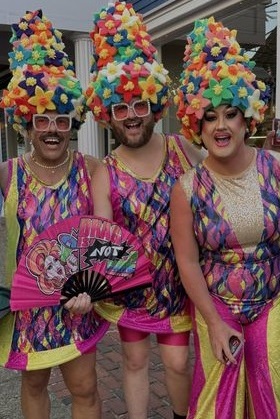
Another persistent stereotype associated with the male
homosexual community is partying. Before the Stonewall
riots in 1969, most LGBTQ people were extremely private
and closeted and house parties and later bars and
taverns became one of the few places where like-minded
men could meet, socialize, and feel safe. The riots
represented the start of the modern LGBTQ social movement
and acceptance of sexual and gender minorities has
steadily increased.
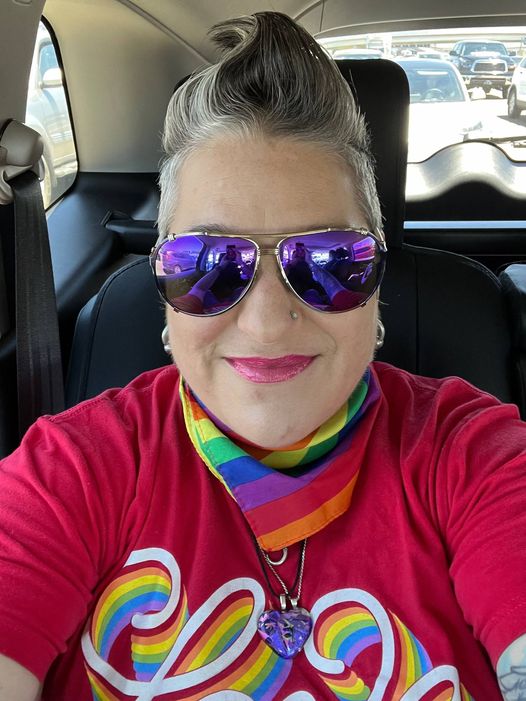
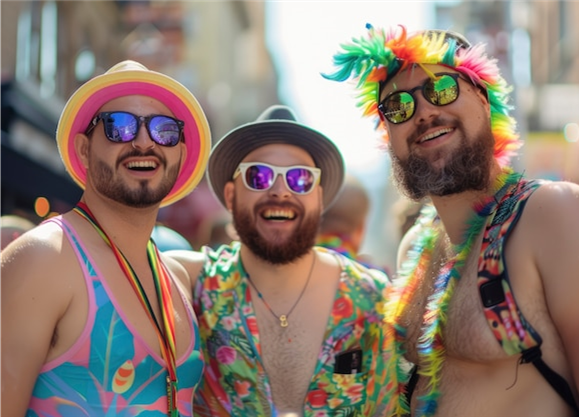
Social occasions which are generally
festive and party-like remain at the core of organizing
and fundraising even currently. In cities where there
are large populations of LGBTQ people, benefits and bar
fundraisers are still common and alcohol companies
invest heavily marketing to LGBTQ subcultures. Ushered in
by underground gay clubs and disc jockeys, the disco era
starting in the 1970s kept the "partying" aspect vibrant
and ushered in the more hardcore circuit party movement
that was hedonistic and associated with party and play
(PNP).
The relationship between gay men and a trusted female
heterosexual companion, known as a "fag hag" has become
highly stereotypical. The accepted behaviors in this
type of relationship range from shopping and dining out
to light petting, but whose sexualities prevent them
from being together.
This is What AI Thinks Gay Men in all 50 States are Like
Queereka: Myths and Misconceptions About Gay Men
Video: What Straight People Think Lesbians Look Like
LGBTQ History: The Story of Camp from Little Richard to
Lil Nas X
Info: Myths and Misconceptions
Queer Like Pete: The Gay Archetype
Huff Post: Why I Hate Being Called a Lipstick Lesbian
Discrimination of Men with
Gay Voices
Lady Gaga Film House of Gucci Isn't Campy Enough
Stereotypes People Should Stop Believing About LGBTQ
People
LGBTQ Stereotypes That Need to Die
Michael Musto: My Proud Life as a Gay Stereotype
Campy, flamboyant, artsy,
glittery, and klutzy
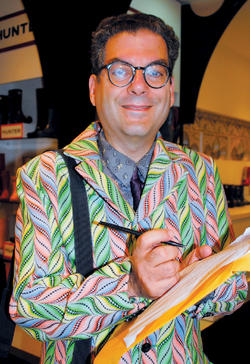
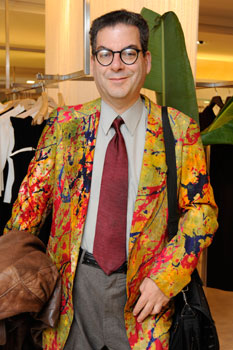
I’ve written before about how I happen to unwittingly
fulfill various clichés of the single, witty (I hope)
gay man in the corner, and how I’ve gradually come to
terms with my plight. But on reflection, it goes far
beyond all that. In fact, I’m clearly a living,
breathing monument to all kinds of gay stereotypes—just
about every one you can think of, though I certainly
didn’t plan any of this; in fact, I’m basically a
self-made personality who grew up with no out gay role
models and had to form my persona from instinct. I’m
proud of myself for being out and vocal, and if I fit
too neatly into certain gay slots, at least I do it my
way. But there’s no denying that I’m as stereotypical as
an interior decorator with a lisp and a handbag. Let me
lay it all out for you, in stereotypical fashion:
--I love show tunes! I can’t help it, but I’m a clichéd
theater queen who lives for a good musical. I grew up
watching excerpts from Broadway musicals on TV variety
shows, longing to see them in person because I knew
their glitzy spunk would lift me out of my shell and
drive me way over the top. Alas, the first show I was
taken to see was Man of La Mancha, a muddy, moody, very
brown enterprise that wasn’t exactly what the gay doctor
ordered. But in the following decade, when I caught the
original productions of A Chorus Line and Chicago in the
same year, my head spun from the joy, invention, and
musicianship on display. That cemented my theater queen
status for all time, and now there’s never a musical I
miss—including the one about Tourette’s syndrome a few
years back. And I stayed for Act Two!
--I live for divas! I love a good, strong, glittery
female performer—any time, any place. Even back in the
Broadway shows I mentioned, it was the women—Donna
McKechnie, Gwen Verdon, Chita Rivera—who made my blood
boil with excitement. There’s nothing more fun for me
than a peppy, funny, powerful lady with pipes and
personality, whether it be Judy, Barbra, Liza, Diana,
Madonna, Rihanna, or Gaga. And what could be more
stereotypical than that?
--I’m terrible at sports! At school, I used to dread
having to go on the parallel bars or be thrown into the
pool. I eventually managed to get into the school
orchestra, partly so that would give me an out from
having to go to gym class. But that didn’t mean my
torture had ended--hardly. In the schoolyard, I was not
even the last one chosen when the kids divvied up teams.
After they picked everyone they wanted, they would
simply leave me there, as unselected as non-organic
kale! There was a brief period when I became interested
in the New York Mets, mainly because it was a way to
bond with my father, but watching them play was as far
as I was going to go when it came to participatory
sports. And as the world’s perception of gays in sports
kept evolving and gay didn’t equal klutzy anymore, I
stubbornly clung to my pathetic-ness, more of an old
stereotype than ever. Even a game of Chess is too
strenuous for me. But at least when all the gays started
obsessively working out, I only went to the gym a total
of four times. Dodged a stereotype that time!
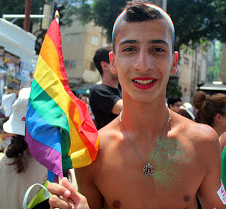  
--I adore campy movies. My favorite kinds of movies
aren’t necessarily the Oscar winners—they’re glossy,
overproduced, hyper-acted “trash” like Valley of the
Dolls, Mahogany, and Mommie Dearest. Watching these
godforsaken gems over and over again, I can’t even see
anything wrong with them. They are pure joy and work for
me on every level, from fashion show to cautionary tale
and beyond. I’d go so far as to say they’re good.
Stereotype, anyone?
--I live for the nightlife. Like a good (clichéd) gay, I
can’t get enough of bars, even after all these years. I
break the mold in that I don’t drink or dance, so I’m
definitely a stranger in a strange land, but still, I
ritualistically feed off the ambience of nightspots
where slightly cracked but fascinating people get
together to let out their ya-yas and express themselves.
And if that makes me a stereotype, so be it.
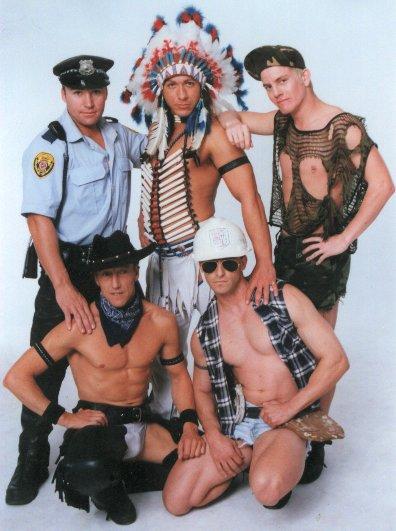  
So there you have it. I’m an old school gay cliché from
my asymmetrically coiffed head to my ultra light
loafers. And rather than crawl under a gay rock about
it, I’ve decided to embrace my status because it’s not a
choice, and besides, “stereotypical” behavior is often
stuff that emerges as a direct result of being gay. When
I was growing up, “sissies” weren’t generally chosen to
play on teams (as I mentioned), which certainly dampened
our interest in sports. And “sissies” like me escaped
into divas and show biz and playing parts in school
plays (and instruments in the orchestra), where we could
pretend to be someone else, while gleefully making our
own kind of music. Also, we learned to cultivate our
witty, cutely catty sides in order to get positive
attention and be popular at gatherings—it was always the
wit of the outsider, gaining access to the mainstream
through zingy intellect. And speaking of gatherings, we
eventually immersed ourselves in nightlife because
there, we found other like-minded, damaged but lovable
weirdos who suddenly belonged because we’d created a
family of fabulous freaks. If that all makes me a
stereotype, so be it.
After all, some stereotypes happen to be endearing
(we’re real people, not just formulas with bank
accounts), as long as you bring some originality to
them. And I know I do! Yes, I’m stereotypically smug
too.
[Source: Michael
Musto | Village Voice | July 2017]
Info: Myths and Misconceptions
Queer Like Pete: The Gay Archetype
Huff Post: Why I Hate Being Called a Lipstick Lesbian
Discrimination of Men with
Gay Voices
Macklemore, Musical Theatre, and More
Elite Daily: Stereotypes
That Limit Our Perception of Gay Men
Info:
Gender Expression
DotGay Dictionary: What is Gaydar?
Gay Myths and Stereotypes
Advocate: Why Effeminate Gays Are Fabulous
BuzzFeed: Lesbian Stereotypes
Queer Code Switching
Media
Stereotypes and Tropes
Gay men
and lesbian women are portrayed in the media in ways
that are very predictable. Viewers of movie and
television stories have come to expect gay men and
lesbian women to be presented in ways that are generally
stereotypical and somewhat one-dimensional. Let's
examine 4 time-honored tropes (two for women and two for
men): the lipstick lesbian, the butch lesbian, the camp
gay, and the manly gay.
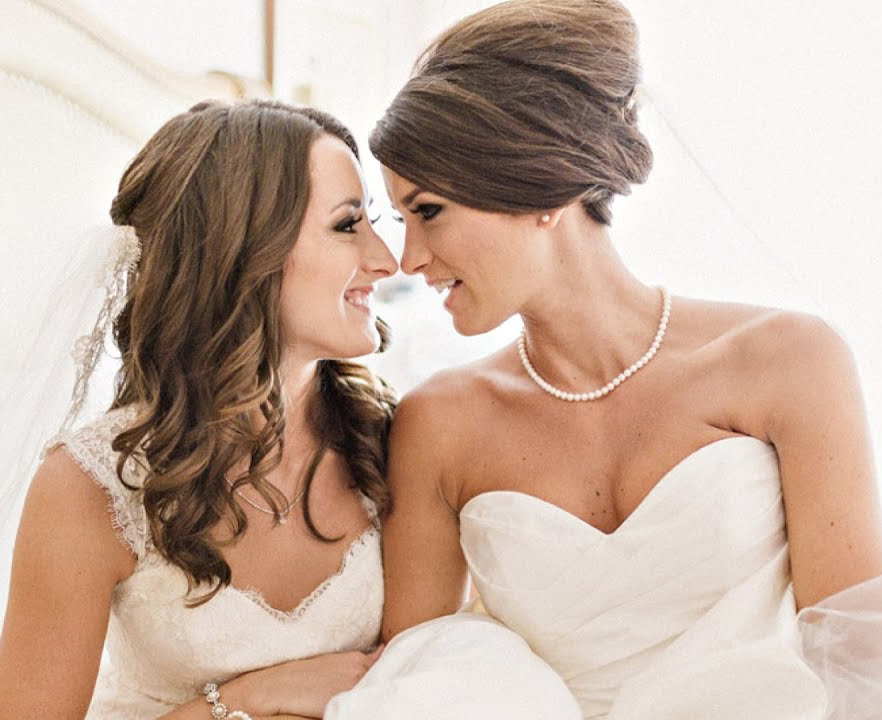
Lipstick Lesbian
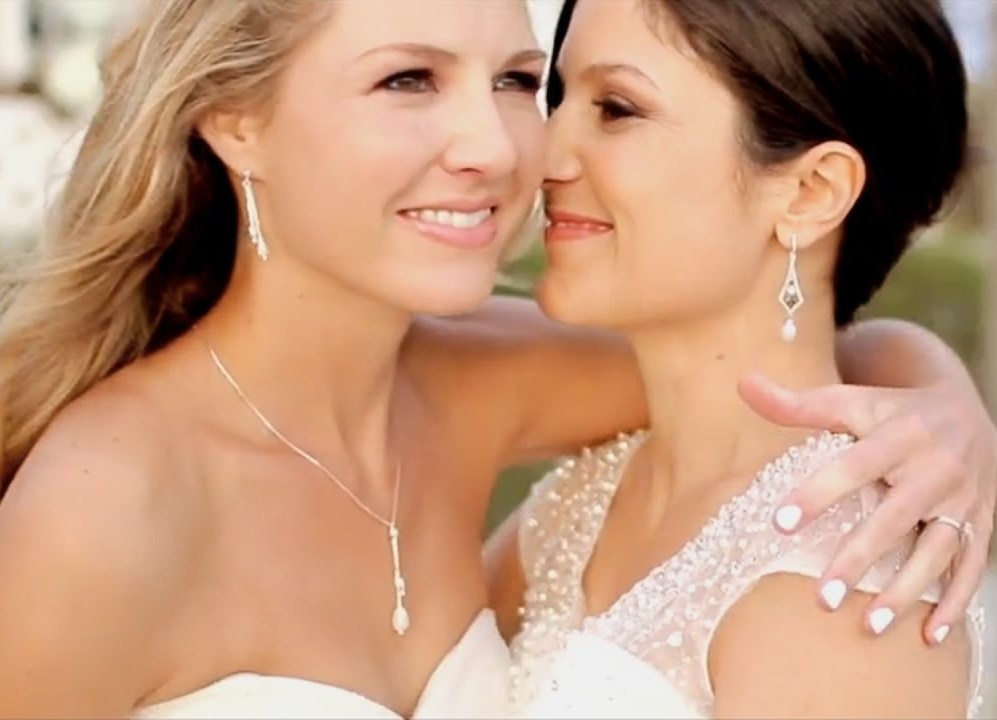
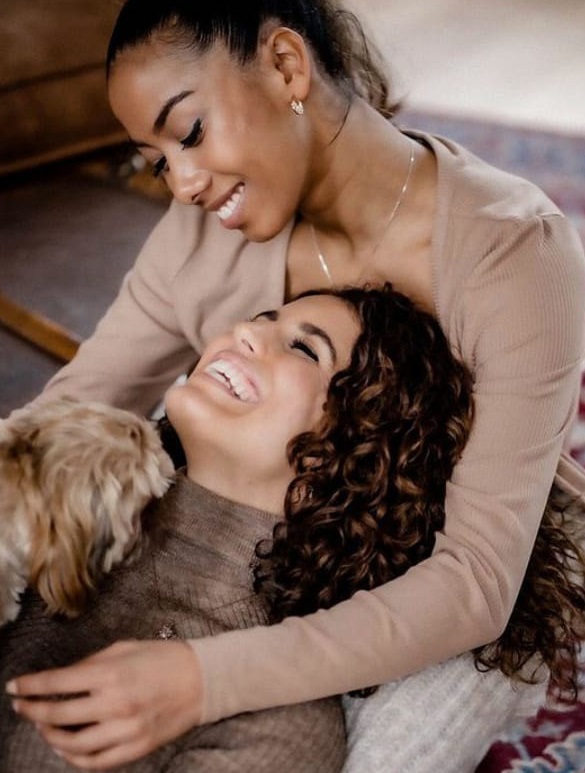
She dresses and acts in a manner that
is considered conventionally feminine, and likes
"feminine" things, like wearing lipstick. Main-character lesbians on TV tend to fall into
this category more often, as it's often seen as "safer",
unless the show is going for "edgy". They also often
have things like long fingernails, unlike their more
masculine counterpart. A related term is "femme".
However, the implication is that, while a "femme" would
be attracted to a "butch" type, lipstick lesbians are
attracted to others of the same type. Also note that in LGBTQ communities, lipstick lesbians tend to be
described as "more feminine" than average straight women
or whose expression of femininity is "over-the-top".
Ellen DeGeneres jokingly coined the term "chapstick
lesbian" to describe those who fall somewhere in between
the two extremes of "lipstick" and "butch". The real
life proportion of lesbians that are lipstick lesbians
is somewhat lower than what one might expect from
watching television.
Big Boys’ Dylan Llewellyn and Jon
Pointing on Subverting Gay TV Tropes
Huff Post: Harmful Stereotypes About Gay Men
SPLC: Anti-Gay Myths Debunked
Stereotypes People Should Stop Believing About LGBTQ
People
Info:
Gender Expression

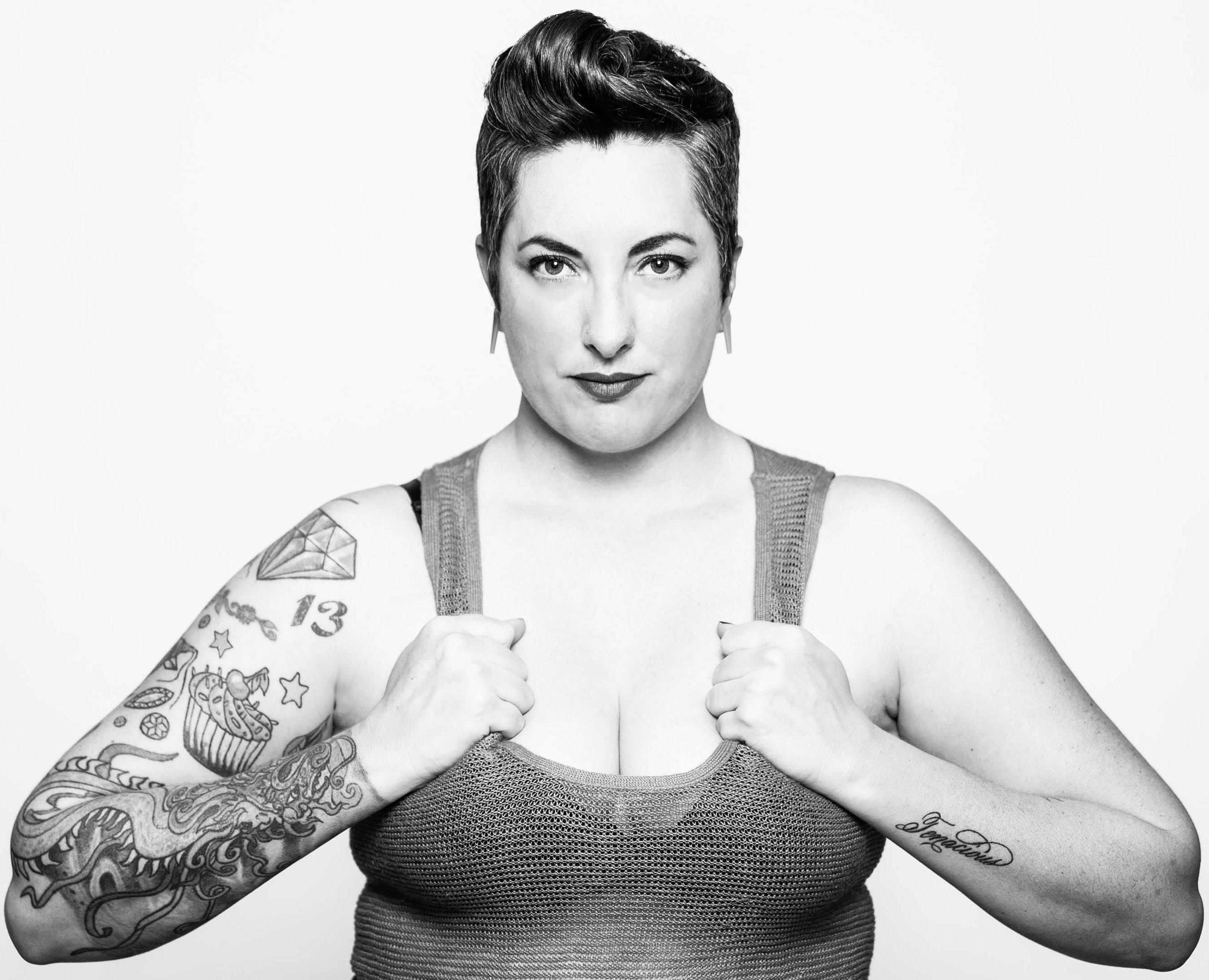
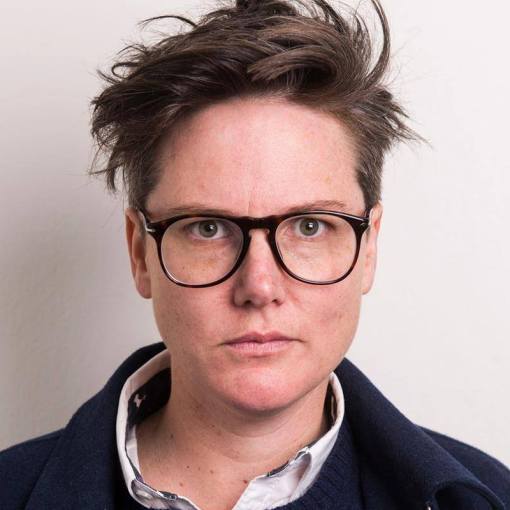
Butch
Lesbian
The contrasting counterpart to the lipstick
lesbian, the butch lesbian is typically clad in heavy
boots, jeans, plain t-shirts and other conventionally
un-feminine attire. She'll have a short haircut and a
job as a mechanic, and often be taller and bulkier than
her femme counterpart, though a lanky or even petite
build is not unheard of. Breast-binding is optional. She
will also probably be the one who gets vocal about gay
rights, persecution, women's rights, and the male gaze.
She may also be quite sporty. On many occasions, she can
be mistaken for a man. Traditionally, butch lesbians are
paired up with high femmes or lipstick lesbians. The
overuse of this trope sometimes comes under fire for
allegedly enforcing the male/female dynamic in
homosexual relationships. A saying within the gay
community is that a butch lesbian is "steel covering
velvet" while a lipstick lesbian is "velvet covering
steel". That's not too much of an exaggeration.


LGBTQ Stereotypes That Need to Die
Gaydar: Is It Real?
Live Science: Debunking Myths About Gay People
Jezebel: Girl's Guide to Lesbian Clichés and Stereotypes
Queereka: Myths and Misconceptions About Gay Men
Video: What Straight People Think Lesbians Look Like
This is What AI Thinks Gay Men in all 50 States are Like
Queer Code Switching
Camp Gay
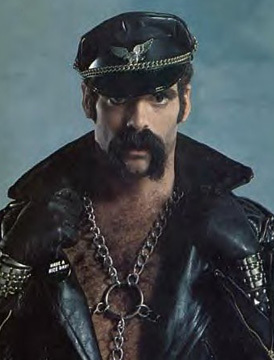
The epitome of a stereotypical gay man. He's flamboyant
in his dress, speech, mannerisms, and interests. He
wears tight (often leather) pants and a loose, blousy
shirt that appears to be made for a much larger man,
often with a bandana, scarf, or kerchief tied around his
neck. These will all be in bright or pastel colors. He
will often speak with a lisp and is given to flouncing,
prancing, and standing with one hand on his hip as the
other is flapped around or held out in a limp-wristed
gesture. There is nothing ambiguous about this guy.
Extreme cases will include near-opaque slang and drag.
Insofar as he has a personality, it will often be vain
and catty, or even cowardly. Even though (compared to
heterosexual men) he will rarely be shown having sex, he
talks about it every second of the day, and if he isn't,
he will be talking about clothes, or complaining about
his terrible friends.
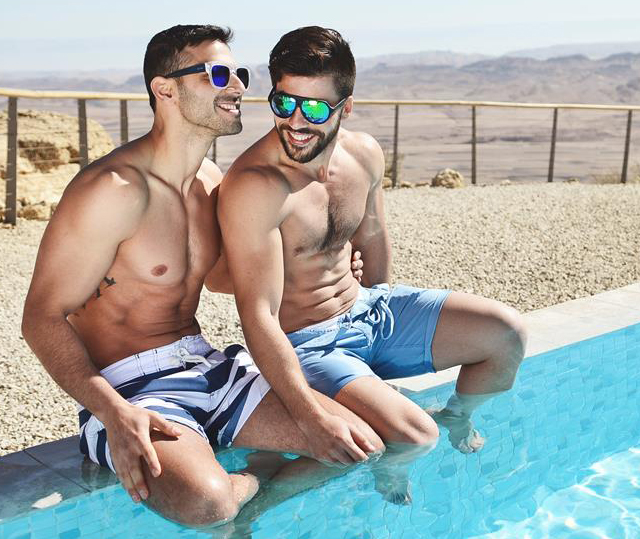
Manly Gay
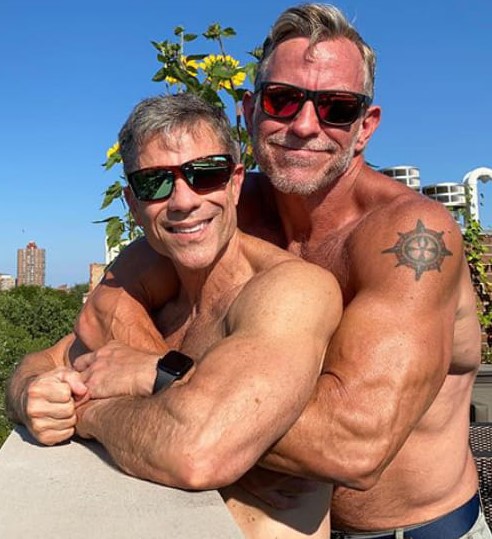
Sitting on the opposite end of the spectrum from Camp
Gay, Manly Gay is when a homosexual man is shown not
only in lacking camp or feminine traits, but kept going
in the opposite direction and into the realm of pure
unbridled masculinity. A character who is Manly
Gay is the complete opposite of the camp stereotype.
Typically such characters are large and strong, and
shown doing masculine things like sports. He may have a
carpet of virility (hairy chest), he may be a badass, or
he may have stout strength. But regardless of how he
got here, the result is the same: He's manlier than your
average man, straight or otherwise. This is an archetype
associated with modern gay porn, but it's also a
distilled ideal of gay male culture, one that often
appeals to other gay men — one of the reasons it has
become so associated with gay porn.
[Source: TV Tropes]
Huff Post: Harmful Stereotypes About Gay Men
DotGay Dictionary: What is Gaydar?
SPLC: Anti-Gay Myths Debunked
Advocate: Why Effeminate Gays Are Fabulous
Stereotypes People Should Stop Believing About LGBTQ
People
Info:
Gender Expression
LGBTQ Stereotypes That Need to Die
Gaydar: Is It Real?
Live Science: Debunking Myths About Gay People
Jezebel: Girl's Guide to Lesbian Clichés and Stereotypes
Queereka: Myths and Misconceptions About Gay Men
Video: What Straight People Think Lesbians Look Like

Camp Explained
"Camp": is a 1909 slang term for
homosexual style. It is an aesthetic style and
sensibility that regards something as appealing because
of its bad taste and ironic value. It is also considered
a performance identity for types of entertainment that
include cabaret, burlesque, parody, mockery, lampoon,
and drag. Where high art necessarily incorporates beauty
and value, camp necessarily needs to be lively,
audacious and dynamic. As an art form, “camp” or
“campy” may be described as kitschy, cheesy,
ostentatious, flamboyant, exaggerated, affected,
theatrical, or excessive.
LGBTQ History: The Story of Camp from Little Richard to
Lil Nas X
Lady Gaga Film House of Gucci Isn't Campy Enough
Wikipedia: Camp
Huff Post: Harmful Stereotypes About Gay Men
Discrimination of Men with
Gay Voices
SPLC: Anti-Gay Myths Debunked
Video: What Straight People Think Lesbians Look Like
Info: Myths and Misconceptions
LGBTQ Stereotypes That Need to Die
Stereotypes People Should Stop Believing About LGBTQ
People
Live Science: Debunking Myths About Gay People
This is What AI Thinks Gay Men in all 50 States are Like
Wikipedia: LGBTQ
Stereotypes

HOME
QUEER CAFE
│ LGBTQ Information Network │ Established 2017 |